Crawl Space Spray Foam Insulation in Huntsville, AL
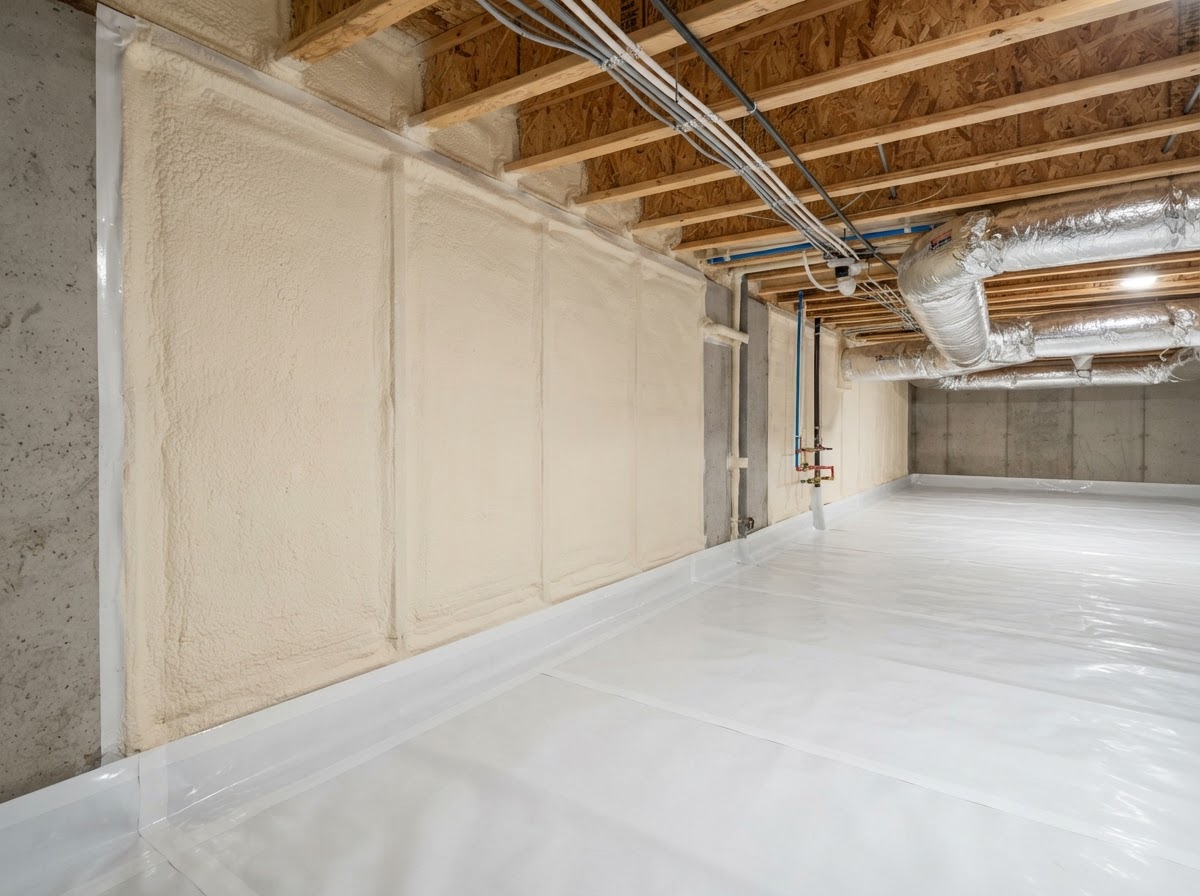
Crawl space spray foam insulation applies spray polyurethane foam to crawl space foundation walls, rim joists, or subfloor framing to insulate and air seal the lowest part of the building envelope. For homeowners in Huntsville, Alabama, it can help reduce humid air infiltration and dampness when moisture sources are addressed separately and the product is matched to the assembly.
Huntsville Spray Foam Installation helps homeowners across Huntsville and the Tennessee Valley evaluate spray foam for damp, drafty crawl spaces. North Alabama crawl spaces often struggle with humid air and ground moisture, and spray foam can be part of the solution for air sealing and insulation. We are straightforward about one important point: spray foam alone does not fix active water intrusion, drainage problems, plumbing leaks, or groundwater issues, and those moisture sources may need to be corrected first.
Request an Insulation Estimate
Tell us about your crawl space spray foam insulation project.
What Crawl Space Spray Foam Does and Who It Is For
Crawl space spray foam is for homeowners dealing with cold floors in winter, musty odors, high indoor humidity, or a drafty living space over a vented foundation. By insulating and air sealing the foundation walls and rim joists, spray foam can help separate the home from the crawl space environment and reduce the movement of humid outdoor air into the space below the floor.
There are two main strategies: sealing and insulating the foundation walls (often as part of an encapsulation approach) and sealing the rim or band joist where the wood framing meets the foundation. The right approach depends on whether the crawl space is being conditioned, the foundation type, access, and how the home is built. We evaluate the assembly before recommending a strategy.
It is important to separate moisture problems from insulation problems. A wet crawl space with standing water, poor drainage, or a plumbing leak needs those sources addressed before insulation is installed. Spray foam does not correct active water intrusion, and we will tell you when moisture correction should come first.
What does crawl space spray foam do?
Crawl space spray foam insulates and air seals foundation walls, rim joists, or subfloor framing to help reduce humid air infiltration and dampness. It is part of an encapsulation strategy, but it does not fix active water intrusion, drainage problems, or plumbing leaks, which may need correction first.
Benefits and Crawl Space Building Considerations
Crawl space performance in North Alabama is a mix of insulation, air sealing, and moisture management. These are the considerations we weigh.
Air sealing the foundation
Closed-cell foam on foundation walls can help reduce the infiltration of humid outdoor air through vented crawl space openings and foundation gaps.
Rim and band joist sealing
The rim joist is a major air-leakage point where wood meets foundation; sealing it can help reduce drafts at the perimeter of the home.
Moisture as a separate issue
Spray foam does not fix active water intrusion, drainage, or plumbing leaks. Moisture sources should be identified and corrected before insulating.
Access and utilities
Plumbing and electrical runs in the crawl space affect access and preparation; we plan around them so the space stays serviceable after insulation.
Crawl Space Foam: Closed-Cell vs. Open-Cell Considerations
Closed-cell foam is the most common choice for crawl space applications, and there are clear reasons tied to the assembly.
Closed-cell spray foam is typically specified for crawl space foundation walls and rim joists because of its lower vapor permeance at sufficient thickness and its resistance to moisture exposure common in below-floor assemblies. Open-cell foam is vapor permeable and generally not the first choice where the assembly will be exposed to crawl space humidity and potential dampness.
The exact thickness and product depend on the wall assembly, whether the crawl space is being conditioned, and the moisture conditions present. We match the specification to the assembly and will not apply foam to a wet substrate or to a space with uncorrected water intrusion.
Closed-cell on foundation walls
Often selected for its lower permeance and durability in humid below-floor environments; the thickness depends on the assembly and goals.
Rim joist sealing
Closed-cell foam at the rim and band joist helps air seal the wood-to-foundation junction, a common source of perimeter drafts.
Planning a Crawl Space Spray Foam Project
A crawl space project starts with understanding the moisture situation, then the insulation and air-sealing strategy. Here is the sequence.
Identify moisture sources
We look for standing water, drainage issues, plumbing leaks, or groundwater before recommending insulation, and we tell you if moisture correction should come first.
Assess the assembly and access
We review foundation type, whether the crawl space is being conditioned, rim joist access, and plumbing and electrical runs that affect preparation.
Select the product and strategy
We specify closed-cell foam and a target thickness for the foundation walls and rim joist based on the assembly and conditions.
Prepare, apply, and verify
We confirm substrates are dry, mask utilities, apply the foam, and verify coverage while keeping the crawl space serviceable.
Related Spray Foam Services
Tennessee Valley crawl spaces often sit above damp clay soils, so moisture evaluation is a required first step, not an afterthought, before any insulation is installed.
Crawl Space Spray Foam FAQs for Huntsville Homeowners
Common questions about insulating and air sealing a crawl space in Huntsville and the surrounding area.
Can spray foam be installed under a floor?
Can spray foam be used on crawl space walls?
Does spray foam stop crawl space moisture?
Should wet crawl spaces be sprayed?
Can rim joists be spray foamed?
How is crawl space spray foam pricing determined?
Discuss Your Crawl Space Spray Foam Project in Huntsville
If your crawl space is damp, your floors are cold, or you smell musty air, Huntsville Spray Foam Installation can evaluate the moisture situation and recommend an appropriate air-sealing strategy. Call (256) 361-1406 or request an estimate.