Residential Spray Foam Insulation in Huntsville, AL
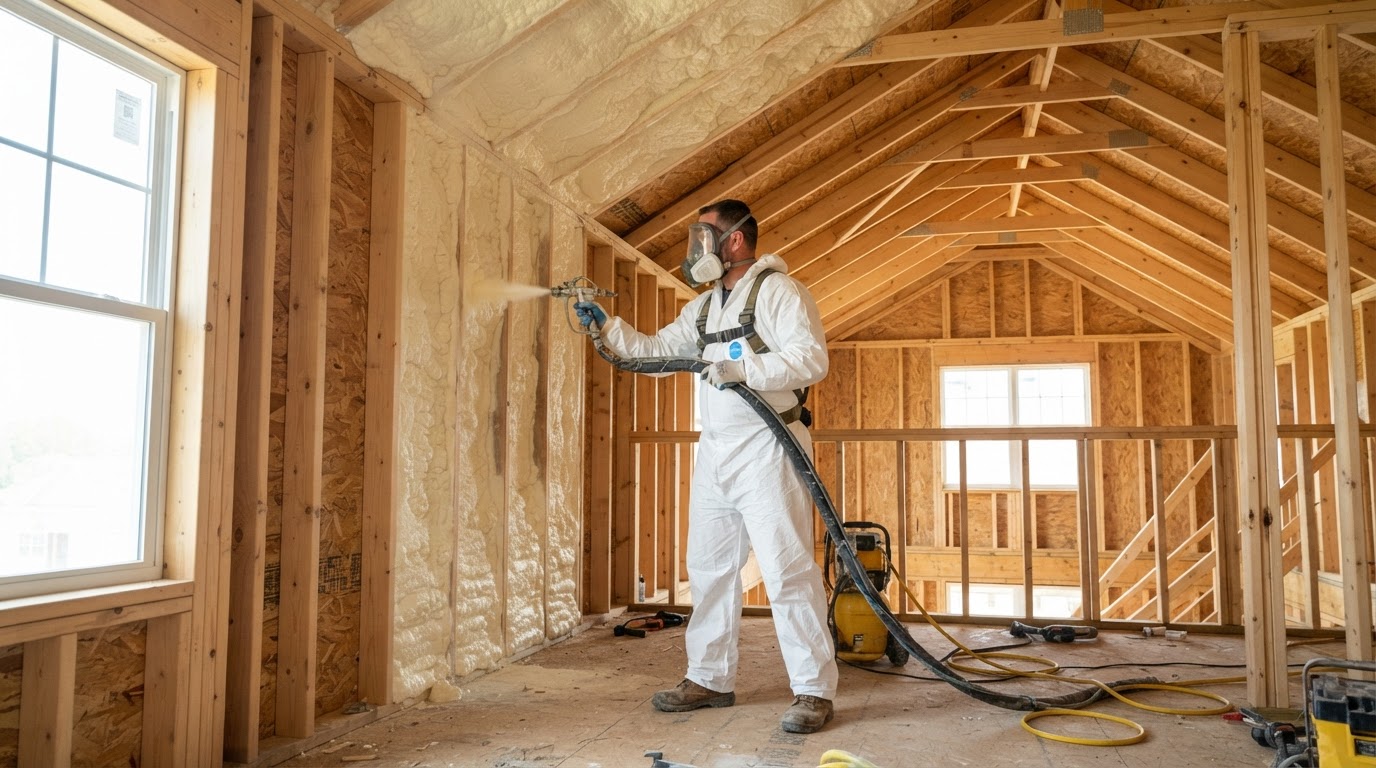
Residential spray foam insulation applies spray polyurethane foam to a home's attic, roofline, wall cavities, and crawl space to create a continuous thermal and air barrier. For homeowners in Huntsville, Alabama, it can help reduce drafts, stabilize indoor temperatures, and limit humid air infiltration when the product is matched to the specific assembly and the home is properly prepared.
Huntsville Spray Foam Installation helps homeowners across Huntsville and the surrounding Tennessee Valley evaluate spray foam for existing homes, renovations, additions, and new construction. Residential spray foam is not a single product applied everywhere the same way — the right approach depends on which part of the home you are insulating, the framing depth available, and whether the assembly can tolerate vapor movement. We look at the whole building envelope, not just one surface, when planning a residential project.
Request an Insulation Estimate
Tell us about your residential spray foam insulation project.
What Residential Spray Foam Does and Who It Is For
Residential spray foam is for homeowners who want a tighter building envelope than fiber insulation typically provides. In a Huntsville home, that usually means addressing hot upper floors in summer, cold and drafty lower levels in winter, musty crawl space air, or high cooling loads driven by attic heat. By air sealing and insulating in one layer, spray foam can help condition the spaces that matter most to comfort — the roofline, the walls, and the crawl space.
It is appropriate for existing homes where the target assembly is accessible, for additions and renovations where framing is exposed, and for new homes where spray foam is planned before drywall. Not every occupied wall can simply be filled with standard spray foam without access or preparation; retrofitting enclosed finished walls has real limitations, and we will be straightforward about what is and is not practical for your home.
Who benefits most: owners of homes with hot second stories or bonus rooms, homes with ductwork in the attic, homes over damp crawl spaces, and owners planning a renovation or new build where the framing is open. Each of these has a corresponding service — attic spray foam for rooflines, crawl space spray foam for foundations, and new construction spray foam for homes still being framed.
What does residential spray foam insulation do?
Residential spray foam insulates and air seals a home's attic, roofline, walls, and crawl space in one continuous layer. In Huntsville homes it can help reduce drafts, stabilize temperatures, and limit humid air infiltration when the product is matched to the assembly and the home is properly prepared.
Benefits and Building Considerations for Huntsville Homes
The value of residential spray foam comes from how it treats the whole envelope. These are the considerations we weigh when planning a home insulation project in North Alabama.
Air leakage control
Spray foam fills gaps around wiring, plumbing, and framing irregularities where fiber insulation leaves channels for air movement, which can help reduce drafts and the infiltration of humid outdoor air.
Roofline conditioning
Moving the thermal boundary to the underside of the roof deck can keep attic ductwork in a tempered space, which may reduce cooling strain during Huntsville summers. See attic spray foam insulation.
Crawl space separation
Closed-cell foam on foundation walls and rim joists can help separate the home from damp crawl space air. Moisture sources should be addressed separately. See crawl space spray foam insulation.
Envelope continuity
Planning the attic, walls, and crawl space as one connected envelope — rather than insulating each surface in isolation — supports more consistent indoor conditions throughout the home.
Open Cell vs. Closed Cell Spray Foam for Huntsville Homes
Most residential projects use a combination of open-cell and closed-cell foam, chosen by assembly rather than by preference. Here is how the two are typically considered for a home.
Open-cell foam is commonly used in interior wall cavities and attic rooflines where framing depth allows a full fill and where a vapor-permeable assembly is acceptable. Its flexibility and expansion make it well suited to deeper residential cavities, and it can also help dampen airborne sound between rooms as a secondary characteristic.
Closed-cell foam is typically selected for crawl space walls and rim joists where lower vapor permeance and higher R-value per inch are desired, and for any area where cavity depth is limited. Neither product is universally better; the decision depends on the assembly, moisture exposure, and available depth.
When open-cell is common
Interior 2x4 or 2x6 wall cavities, open-attic rooflines with deep rafters, and bonus-room knee walls where vapor permeability suits the assembly.
When closed-cell is common
Crawl space foundation walls, rim and band joists, and any cavity where depth is shallow or where a vapor retarder is desired for the assembly.
Planning a Residential Spray Foam Project in Huntsville
A residential project usually involves more than one assembly. We sequence the work around what is accessible and what the homeowner is trying to improve.
Identify comfort priorities
We start with what bothers you most — hot rooms, cold floors, high bills, or musty air — because that points to which assembly needs attention first.
Inspect the envelope
We review attic access, crawl space entry, existing insulation condition, framing depth, and any moisture issues that should be addressed before insulating.
Match the product to each assembly
We specify open-cell or closed-cell foam for each surface based on depth, moisture exposure, and goals, and explain where existing insulation may need attention.
Prepare and install
We mask finished areas, confirm substrates are dry, apply the foam, and coordinate around occupancy so the home is left clean and ready to finish.
Related Spray Foam Services
Huntsville homes range from older ranches and split-levels to new custom builds, so access and assembly vary widely. A home over a damp crawl space, for example, has different preparation needs than a new build with open framing.
Residential Spray Foam FAQs for Huntsville Homeowners
Common questions from homeowners evaluating spray foam for a house in Huntsville and the surrounding area.
Is spray foam suitable for an existing home?
Can spray foam be installed in a residential attic?
Can spray foam help reduce drafts?
Open-cell or closed-cell for a house?
How much does residential spray foam cost in Huntsville?
How long does residential installation take?
Request a Residential Spray Foam Estimate in Huntsville
If you are dealing with hot rooms, drafty floors, a damp crawl space, or a renovation with open framing, talk with us about residential spray foam insulation for your Huntsville home. Call (256) 361-1406 or request an estimate to discuss your envelope.