New Construction Spray Foam Insulation in Huntsville, AL
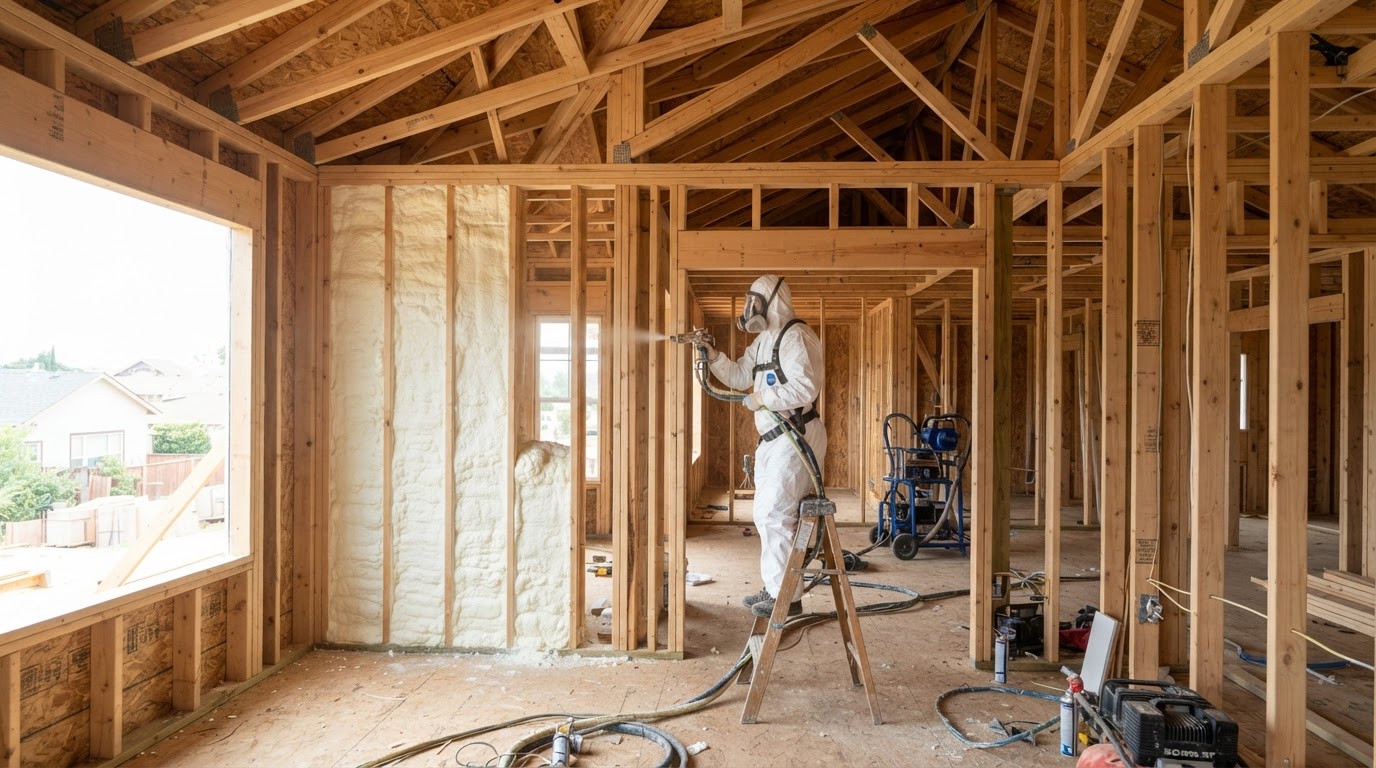
New construction spray foam insulation installs spray polyurethane foam in a new home or building before drywall and interior finishes, creating a continuous thermal and air barrier from the start. For homeowners, builders, and general contractors in Huntsville, Alabama, planning spray foam before drywall lets the envelope be sealed around framing, electrical, plumbing, and HVAC before those systems are closed in.
Huntsville Spray Foam Installation works with homeowners, custom-home builders, general contractors, barndominium builders, and commercial construction across Huntsville and the Tennessee Valley. New construction is the ideal moment for spray foam, because the framing is open and the full envelope can be sealed before drywall. Planning foam early — and coordinating with the other trades — is what makes a new construction envelope perform. We do not perform inspections or control code approval; those remain with the project's builder and jurisdiction.
Request an Insulation Estimate
Tell us about your new construction spray foam insulation project.
Who New Construction Spray Foam Is For
This service is for anyone building from the ground up: homeowners building a custom home, general contractors, barndominium builders, and commercial construction teams. It also covers major additions and renovations where walls and rooflines are open. The advantage of new construction is that the framing is accessible, so spray foam can be applied with complete coverage around every stud, rafter, and penetration before they are closed in.
For builders, planning spray foam early means insulation is sequenced correctly with framing, electrical, plumbing, and HVAC rather than rushed at the end. For owners, it means the envelope is designed in rather than added later, which is the difference between a building that performs as a system and one with patched-in insulation.
We coordinate with the project's trades and schedule, but we do not perform inspections or control code approval — those remain the responsibility of the builder and the local jurisdiction. Our role is to install the specified envelope cleanly and on schedule.
When is spray foam installed in new construction?
Spray foam is installed after rough framing, electrical, plumbing, and HVAC are in place and before drywall and interior finish. Planning it early lets the full envelope be sealed around those systems before they are closed in, which is the core advantage of new construction spray foam.
Benefits and Planning Considerations for New Builds
New construction lets the envelope be designed in. These are the considerations we plan around with builders and owners.
Sealing before drywall
With framing open, spray foam can cover every stud, rafter, and penetration before drywall, giving complete coverage that retrofit work cannot match.
Trade coordination
Foam is sequenced after rough-in of electrical, plumbing, and HVAC, so those systems are in place and the envelope seals around them.
Roofline and wall strategy
Early planning lets us choose roofline vs wall strategies and open-cell vs closed-cell before framing decisions lock them in.
Inspections and code
We do not perform inspections or control code approval; those remain with the builder and local jurisdiction. Our role is to install the specified envelope.
Selecting Open-Cell or Closed-Cell for a New Build
For new construction, the open-cell vs. closed-cell decision is made assembly by assembly during planning.
In a new home, open-cell foam is commonly used in interior wall cavities and rooflines where expansion, sound dampening, and vapor permeability suit the assembly. Closed-cell foam may be selected for crawl spaces, rim joists, metal skins, or where higher R-value per inch or a vapor retarder is desired. The choice is made per assembly, not as a single blanket decision for the whole building.
For a new barndominium or metal building, closed-cell is often specified on the metal skin and roof, with open-cell in framed partitions. For a new stick-framed home, open-cell on the roofline and walls is common. We help the builder and owner choose based on each assembly's goals.
New stick-framed home
Open-cell foam is commonly used in interior walls and rooflines where expansion, sound dampening, and vapor permeability suit the assembly.
New metal or barndo build
Closed-cell is often specified on the metal skin and roof, with open-cell in framed partitions, tailored per assembly.
Crawl space and rim joist
Closed-cell may be selected for crawl spaces and rim joists where lower permeance and moisture exposure are concerns.
Coordinating Spray Foam With Your Build Schedule
New construction is about timing as much as product. Here is how we sequence spray foam with a build.
Plan during design or early framing
We meet during planning or early framing to scope the envelope, choose assemblies, and set the foam strategy before decisions lock in.
Confirm rough-in is complete
We confirm framing, electrical, plumbing, and HVAC rough-in are complete so the envelope seals around those systems.
Prepare the open framing
With framing open, we mask windows, doors, and mechanical equipment and confirm substrates are dry and clean.
Apply, verify, and release for drywall
We apply the foam, verify coverage, and release the building for drywall and interior finish on the builder's schedule.
Related Spray Foam Services
Huntsville-area growth means we work with both custom-home builders and barndominium builders, so the envelope strategy is set early in each project.
New Construction Spray Foam FAQs for Builders and Owners
Questions from homeowners, builders, and general contractors in Huntsville and the Tennessee Valley.
When is spray foam installed in new construction?
Should plumbing and electrical be completed first?
Open-cell or closed-cell for a new home?
Can builders coordinate spray foam before drywall?
Can spray foam be used in new metal buildings?
How should I plan for spray foam early in a build?
Plan Spray Foam for Your New Construction Project
For new homes, barndominiums, and commercial builds in Huntsville and the Tennessee Valley, Huntsville Spray Foam Installation can help plan the envelope before drywall and coordinate with your build schedule. Call (256) 361-1406 or request an estimate.