Workshop Spray Foam Insulation in Huntsville, AL
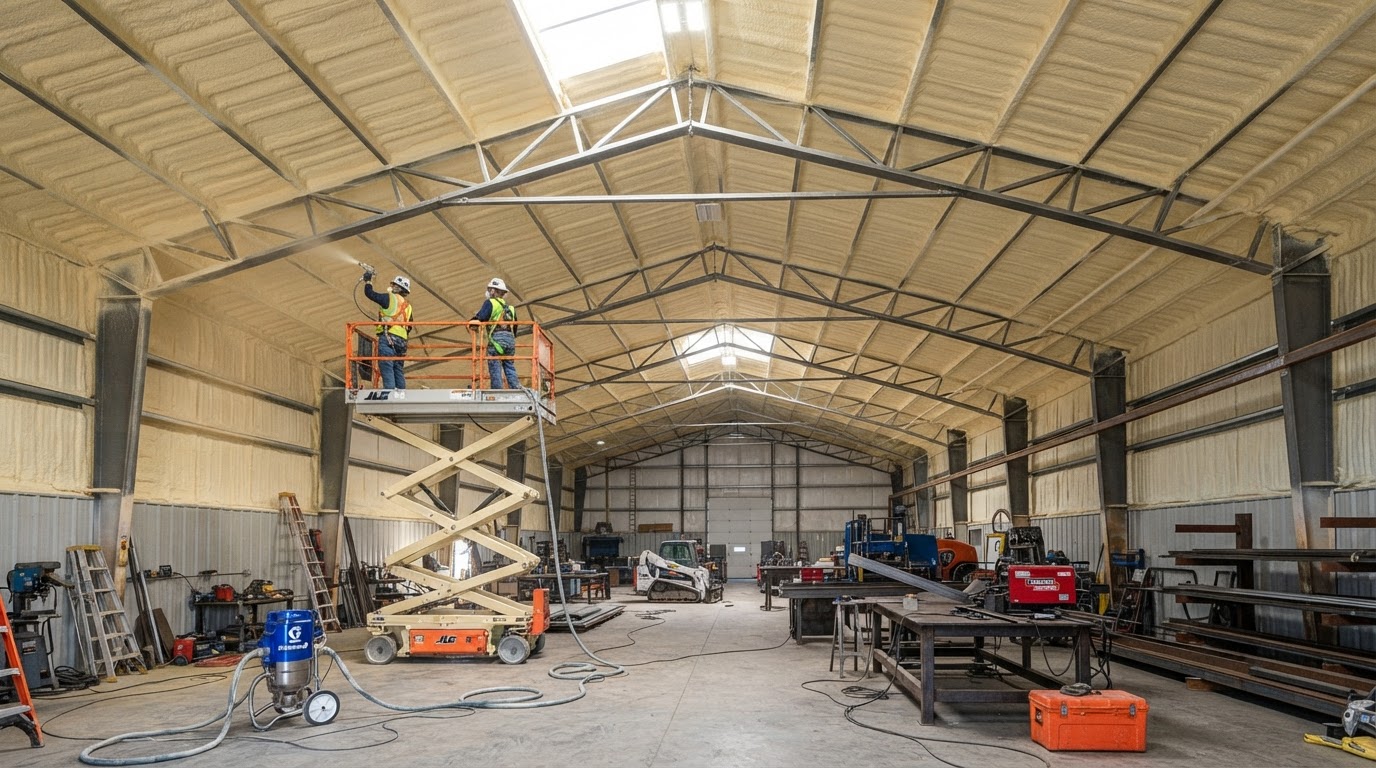
Workshop spray foam insulation applies spray polyurethane foam to the walls and roof of a detached shop, garage workshop, or fabrication space to insulate and air seal the building. For owners in Huntsville, Alabama, it can help make a workshop easier to heat and cool when the product matches the construction — but workshops may have separate ventilation and safety requirements for fumes, dust, welding, or combustion equipment that insulation alone does not address.
Huntsville Spray Foam Installation insulates detached workshops, home shops, woodworking spaces, automotive hobby shops, fabrication shops, and metal workshops across Huntsville and the Tennessee Valley. A workshop is a specific use case: it is not a garage and not a home, and the insulation strategy depends on whether the space is wood-framed or metal, how it is heated and cooled, and what happens inside it. We treat workshop spray foam as a high-priority service because a conditioned workshop is one of the most rewarding projects we install — and one where getting the details right matters most.
Request an Insulation Estimate
Tell us about your workshop spray foam insulation project.
What Types of Shops Can Use Spray Foam
Spray foam works for a wide range of workshops in the Huntsville area: detached home shops, woodworking spaces that need stable humidity to protect lumber and finishes, automotive restoration shops, metal fabrication shops, equipment shops, and post-frame workshop buildings. The common thread is a space the owner wants to heat or cool efficiently without a full-size HVAC system fighting leaks.
The value for a workshop is air sealing. A detached shop with gaps around doors, between framing, and at the roofline will leak conditioned air constantly, which is why a small mini-split or heater struggles in a leaky building. Spray foam conforms to the framing and seals those gaps in one application, which is what lets a modest system keep a workshop comfortable year-round.
An important distinction: insulation is not ventilation. Workshops used for welding, finishing, combustion equipment, or chemicals may need separate ventilation for fumes, dust, and safety. Spray foam does not handle those needs, and we will point that out rather than imply insulation solves them.
What types of shops can use spray foam?
Detached home shops, woodshops, automotive hobby shops, fabrication shops, equipment shops, and post-frame workshops can all use spray foam to insulate and air seal the building. The right product depends on whether the shop is wood-framed or metal and how it is heated and cooled.
Workshop Benefits and Application Considerations
Workshops have a specific set of demands around comfort, equipment protection, and air sealing. These are the considerations behind a workshop spray foam project.
Easier heating and cooling
By air sealing the shell, spray foam can help a modest mini-split or heater keep a workshop comfortable year-round without fighting constant air leakage.
Protecting tools and materials
Stable, drier interior conditions can help protect precision tools, lumber, finishes, and electronics from condensation and humidity swings.
Door and roof air leakage
Workshop doors and rooflines are major leak points; spray foam addresses the walls and roof, while weatherstripping and door seals handle the openings.
Ventilation as a separate need
Workshops used for welding, finishing, or combustion equipment may need ventilation for fumes and safety that insulation does not provide.
Spray Foam for Wood-Framed vs Metal-Framed Workshops
The foam choice for a workshop depends on whether the shop is wood-framed or metal, and how the space is used.
For a wood-framed workshop with deep stud cavities, open-cell foam is a common choice because it expands to fill the framing, air seals the walls, and offers sound dampening that is welcome in a shop. For a metal workshop with steel walls and roof, closed-cell foam is typically selected to bond directly to the panels, manage condensation, and deliver high R-value per inch.
Many workshops are mixed: metal skin with a framed interior, or a post-frame shop with metal siding and framed partition walls. In those cases we may combine products — closed-cell on the metal and open-cell in the framing — based on the assembly. The right approach depends on the construction and the use, and we tailor it rather than defaulting to one product.
Wood-framed workshop
Open-cell foam often suits deep stud cavities, expanding to fill framing and adding sound dampening for shop use.
Metal workshop
Closed-cell foam bonds directly to steel panels and roof, managing condensation and delivering high R-value per inch.
Mixed construction
A metal-skinned shop with framed interior may use closed-cell on the metal and open-cell in the framing, tailored to the assembly.
Planning a Workshop Spray Foam Project in Huntsville
A workshop project centers on the building type, the use of the space, and ventilation needs. Here is how we approach it.
Review the building type and use
We discuss whether the shop is wood-framed, metal, or post-frame, and how it is used — woodworking, auto, fabrication, or equipment storage.
Address ventilation and safety
If the shop is used for welding, finishing, or combustion equipment, we point out ventilation and safety needs that insulation does not cover.
Evaluate walls and roof
We inspect the wall and roof assemblies, framing depth, door and opening leakage, and any existing insulation or moisture issues.
Prepare, apply, and verify
We mask tools and contents, apply the appropriate foam to walls and roof, and verify coverage before cleanup.
Related Spray Foam Services
Huntsville, Harvest, and Hazel Green have a high concentration of detached workshops for automotive restoration, woodworking, and fabrication, so shop type and use drive every workshop specification.
Workshop Spray Foam FAQs for Huntsville Shop Owners
Questions from owners of detached shops, woodshops, and fabrication spaces in Huntsville and the Tennessee Valley.
Is spray foam worth it for a workshop?
Can I spray foam a metal workshop?
What foam is better for a detached shop?
Can spray foam help keep a workshop easier to heat and cool?
Should a workshop be insulated before drywall?
How much does workshop spray foam cost in Huntsville?
Talk With a Huntsville Workshop Spray Foam Contractor
For detached shops, woodshops, auto and fabrication shops in Huntsville and the Tennessee Valley, Huntsville Spray Foam Installation can evaluate your workshop and recommend an appropriate insulation and air-sealing approach. Call (256) 361-1406 or request an estimate.