Roof Deck Spray Foam Insulation in Huntsville, AL
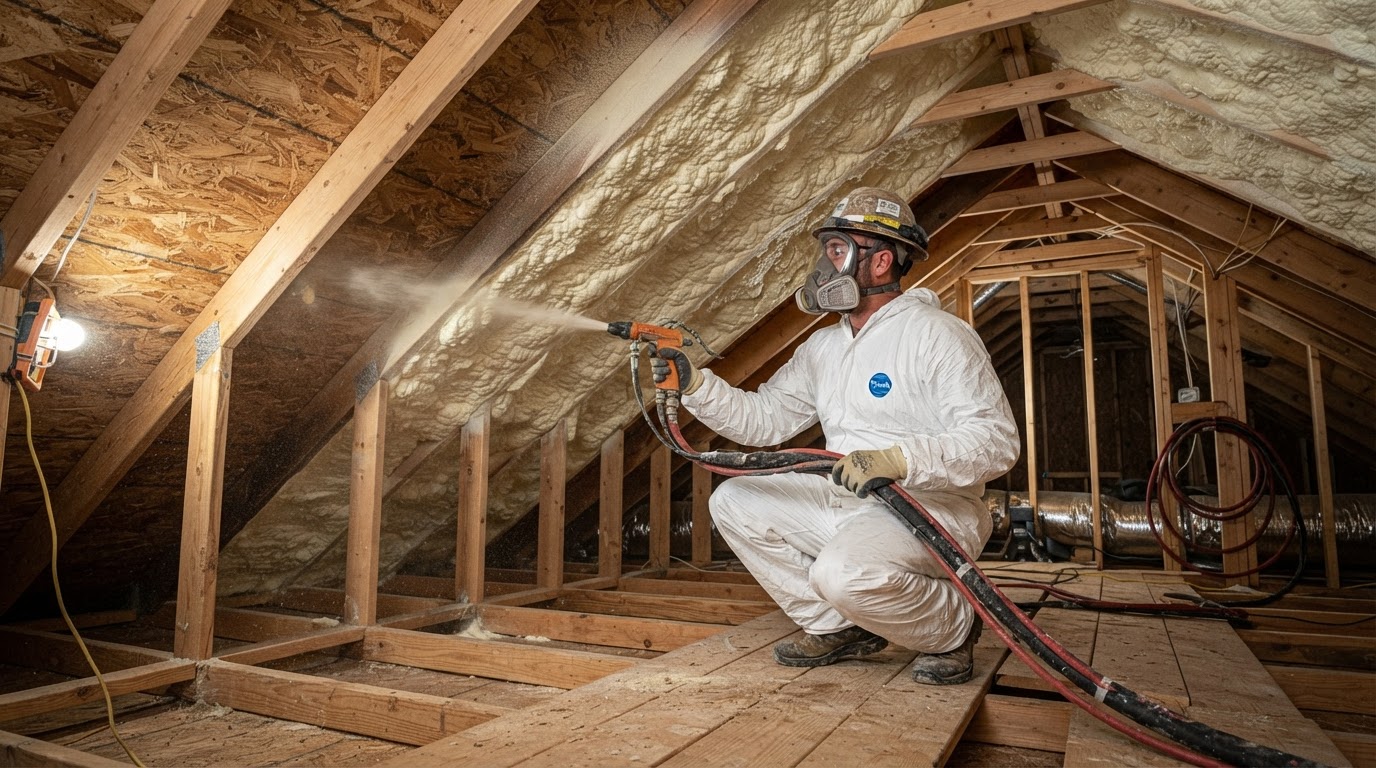
Roof deck spray foam insulation applies spray polyurethane foam to the underside of the roof sheathing — between and over the roof rafters — to insulate and air seal the roofline. For homeowners in Huntsville, Alabama, it is a specific roofline strategy distinct from attic-floor insulation, and whether it is appropriate depends on the roof assembly, roofing material, code requirements, climate, vapor strategy, and product specifications. It does not repair a leaking roof, and roof vents should not always be sealed.
Huntsville Spray Foam Installation applies roof deck spray foam across Huntsville and North Alabama. This page is more technical than the general attic service: it focuses specifically on the underside-of-roof-deck assembly, the roofline thermal boundary, and the decision between a roof-deck strategy and an attic-floor strategy. The right approach depends on the roof assembly and what is in the attic.
Request an Insulation Estimate
Tell us about your roof deck spray foam insulation project.
What Roof Deck Spray Foam Addresses
Roof deck spray foam is applied to the underside of the roof sheathing, between and over the roof rafters, creating a thermal and air boundary at the roofline rather than at the attic floor. This is distinct from attic-floor insulation, which insulates the ceiling of the living space below and leaves the attic itself unconditioned. A roof-deck strategy moves the thermal boundary up to the roof, which can bring the attic space inside the conditioned envelope.
The decision between a roof-deck strategy and an attic-floor strategy depends on what is in the attic. When HVAC equipment, ductwork, or air handlers are located in the attic, insulating the roof deck can bring that equipment inside a semi-conditioned space, which can reduce the temperature extremes the equipment operates in. When the attic is empty and unused, an attic-floor strategy may be more appropriate.
Existing attic insulation and roof condition are key considerations. Old attic-floor insulation may be removed, left, or supplemented depending on the strategy. The roof itself must be sound — spray foam does not repair a leaking roof, and applying foam over an active leak can trap moisture. Roof condition is reviewed before any roofline insulation work.
Can spray foam be applied to the underside of a roof deck?
Yes, spray foam can be applied to the underside of the roof sheathing between rafters to insulate and air seal the roofline. Whether it is appropriate depends on the roof assembly, roofing material, code requirements, climate, vapor strategy, and product specifications. It does not repair a leaking roof, and roof vents should not always be sealed.
Roof Deck Benefits and Assembly Considerations
Roof deck spray foam is a roofline strategy with specific assembly considerations. These are the factors behind a roof-deck project.
Roofline thermal boundary
Roof deck foam moves the thermal boundary to the roofline, which can bring the attic inside the conditioned envelope when that is the project goal.
HVAC and ducts in the attic
When HVAC equipment or ductwork is in the attic, a roof-deck strategy can place that equipment inside a semi-conditioned space rather than an extreme attic environment.
Attic floor vs roof deck
A roof-deck strategy is distinct from attic-floor insulation. The choice depends on what is in the attic and the project's thermal-boundary goals.
Roof condition first
The roof must be sound before roofline insulation. Spray foam does not repair a leaking roof, and existing leaks must be addressed separately.
Open Cell vs. Closed Cell at the Roof Deck
The roof deck is an assembly where the open-cell versus closed-cell choice is technically significant. The two products behave differently at the roofline, and the choice depends on the roof assembly and vapor strategy.
Open-cell spray foam is a common choice for interior roof-deck applications in suitable framed assemblies. It expands to fill the rafter cavities and provides air sealing at the roofline. Its higher vapor permeability can allow some drying potential in certain roof assemblies, which is one reason it is discussed for roof-deck applications, but whether that is appropriate depends on the specific roof, climate, and vapor strategy.
Closed-cell spray foam is denser, offers a higher approximate R-value per inch, and has lower vapor permeance at appropriate product-specific thicknesses. It is sometimes used at the roof deck where a more vapor-resistant layer is the objective, but because it is less permeable, it can also limit drying potential in some assemblies. The choice is assembly-specific and should not be treated as universal.
Ventilation is a critical consideration. A roof-deck spray foam strategy often relates to an unvented or conditioned-attic approach, but roof vents should not always be sealed — whether to seal vents depends on the roof assembly, code requirements, climate, and the vapor strategy selected. This is a decision made for the specific roof, not a blanket rule. R-values are approximate and product-dependent, and neither foam guarantees specific energy savings.
| Roof deck factor | Open-Cell | Closed-Cell |
|---|---|---|
| Rafter cavity fill | High expansion, fills cavity | Denser, less expansion |
| R-value per inch | Lower (approximate) | Higher (approximate, product-dependent) |
| Vapor permeability | More permeable, some drying | Lower permeance, less drying |
| Typical roof-deck use | Common in framed roof decks | Where vapor resistance is desired |
Roof Deck Planning and Related Services
A roof-deck project is planned around the roof assembly, what is in the attic, and the vapor strategy. These are the typical stages, though requirements vary by roof.
Discuss the roof and attic
We review the roof assembly, roofing material, whether HVAC or ducts are in the attic, and the project's thermal-boundary goals.
Inspect roof condition and existing insulation
The roof is checked for soundness — active leaks must be addressed separately. Existing attic insulation is reviewed for removal, retention, or supplementation.
Determine foam and ventilation strategy
Based on the roof assembly and vapor strategy, we discuss open-cell or closed-cell and whether a vented or unvented approach is appropriate for the specific roof.
Prepare and apply
The work area is prepared, spray polyurethane foam is applied to the underside of the roof deck between rafters, and the work area is reviewed and cleaned.
Related Spray Foam Services
Huntsville Spray Foam Installation serves roof-deck projects in Huntsville and across North Alabama. Call (256) 361-1406 to discuss your roof assembly and whether a roofline strategy is right for your attic.
Roof Deck Spray Foam FAQs for Huntsville Homes
Common questions about insulating the underside of the roof deck with spray foam in the Huntsville area.
Can spray foam be applied to the underside of a roof deck?
Is roof deck spray foam the same as attic-floor insulation?
Open-cell or closed-cell for a roof deck?
Do roof vents stay open after roofline spray foam?
Can spray foam fix a roof leak?
What affects roof deck spray foam pricing?
Discuss Your Roof Deck Spray Foam Project
If you are considering a roofline strategy for your Huntsville attic, Huntsville Spray Foam Installation can review your roof assembly, attic contents, and vapor strategy. Call (256) 361-1406 or request an estimate to discuss whether a roof-deck approach is right for your home.