Wall Spray Foam Insulation in Huntsville, AL
Wall spray foam insulation applies spray polyurethane foam into wall cavities to insulate and air seal the wall assembly. For builders and homeowners in Huntsville, Alabama, it is generally easiest when the framing is exposed before drywall or interior finishes are installed — finished, closed walls cannot simply be sprayed without opening surfaces or using an application specifically designed for that situation.
Huntsville Spray Foam Installation insulates exterior walls, interior partitions, garage walls, and workshop walls across Huntsville and North Alabama. Wall spray foam is a framing-stage service: it shines when studs are open and the foam can fill cavities, seal around wiring and plumbing penetrations, and create a continuous air barrier before finishes go up.
Request an Insulation Estimate
Tell us about your wall spray foam insulation project.
Where Wall Spray Foam Fits
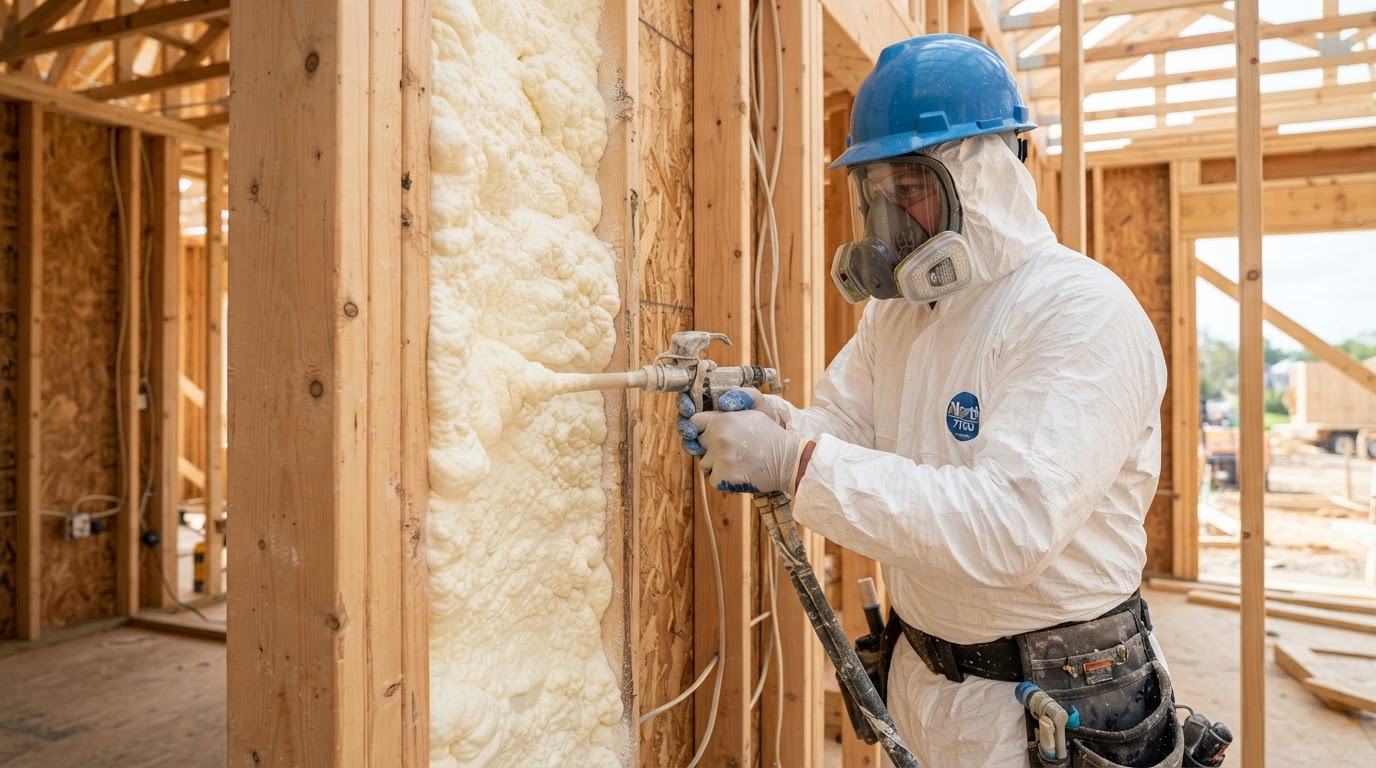
Wall spray foam is most practical when framing is exposed. That includes new construction before drywall, additions, remodels where interior finishes have been removed, attached garage walls, and workshop or outbuilding walls with open studs. In each case, the foam is applied into the open cavity and conforms to the studs, plates, and any penetrations.
Exterior framed walls are the most common target, because they separate conditioned space from outdoor heat, cold, and humidity. Interior partitions are sometimes insulated for sound considerations between rooms, though spray foam is not complete soundproofing. Metal walls, such as those on workshops or steel buildings, can also be spray foamed when the product and substrate are appropriate.
The key limitation: finished, closed walls. Conventional spray foam is not simply injected into sealed wall cavities without opening surfaces or using an application specifically designed for that situation. If walls are already drywalled and finished, the realistic path is to wait until a remodel opens them, or to address the wall through a different approach.
Can spray foam be used inside walls?
Yes, spray foam can be used inside wall cavities when the framing is exposed — most often during new construction, additions, or remodels. It fills the cavity, seals around penetrations, and creates an air barrier. Finished, closed walls cannot simply be sprayed without opening surfaces or using an application specifically designed for that situation.
Wall Insulation Benefits and Application Considerations
Wall spray foam is valued for air sealing and cavity fill. These are the considerations behind a wall insulation project.
Cavity fill and air sealing
Spray foam conforms to studs, plates, and irregular framing, filling gaps that batt insulation can leave open and sealing the wall assembly in one application.
Penetration sealing
Foam seals around electrical boxes, wiring, and plumbing penetrations in the wall, reducing air movement through these common leak paths.
Exterior wall separation
In exterior framed walls, spray foam helps separate conditioned interior space from outdoor heat, cold, and humidity.
Framing-stage timing
Wall spray foam is scheduled after rough-in (electrical, plumbing) and before drywall, so cavities are open and accessible.
Open Cell vs. Closed Cell for Wall Cavities
Both open-cell and closed-cell can be used in wall cavities, but they behave differently. The choice depends on the wall assembly, the project goals, and whether vapor resistance matters.
Open-cell spray foam is a common choice for interior framed walls. It expands significantly, fills the cavity, and provides air sealing at a lower installed thickness requirement. Its higher vapor permeability means it allows some vapor movement, which is generally acceptable in many interior and attic-adjacent wall assemblies but may not be right where a vapor-resistant layer is the objective.
Closed-cell spray foam is denser and offers a higher approximate R-value per inch than typical open-cell products. In a standard 2x4 or 2x6 wall cavity, closed-cell can deliver more thermal resistance in the same depth. Its lower vapor permeance at appropriate product-specific thicknesses can be relevant for exterior walls where vapor management is a concern. Product and thickness requirements vary.
R-values are approximate and product-dependent. Neither foam type guarantees specific energy savings, and neither makes a wall waterproof. The appropriate choice depends on the wall assembly, the climate, the vapor strategy, and the project goals — not on a universal rule.
| Wall factor | Open-Cell | Closed-Cell |
|---|---|---|
| Expansion | High, fills cavity fully | Moderate, denser fill |
| R-value per inch | Lower (approximate) | Higher (approximate, product-dependent) |
| Vapor permeability | More permeable | Lower permeance at proper thickness |
| Typical wall use | Interior framed walls | Exterior walls, vapor-sensitive assemblies |
Wall Spray Foam Timing and Related Services
Wall spray foam is scheduled around the framing and rough-in stages. These are the typical steps, though timing varies by project.
Confirm framing is ready
Wall spray foam is applied after framing and rough-in (electrical, plumbing) are complete and before drywall or interior finishes are installed.
Review the wall assembly
We look at stud depth, exterior sheathing, any existing insulation, and penetrations to determine the appropriate foam and target thickness.
Apply the foam
Spray polyurethane foam is applied into the open cavities, conforming to the studs and sealing around wiring, boxes, and penetrations.
Trim and prepare for finishes
Excess foam is trimmed flush where needed, and the wall is prepared for drywall or the intended interior finish.
Related Spray Foam Services
Huntsville Spray Foam Installation coordinates wall spray foam with builders and remodelers across Huntsville and North Alabama. Call (256) 361-1406 to schedule wall insulation at the right stage of your project.
Wall Spray Foam Insulation FAQs for Huntsville Projects
Common questions about insulating wall cavities with spray foam in the Huntsville area.
Can spray foam be used inside walls?
Can finished walls be spray foamed?
Open-cell or closed-cell for wall cavities?
Can spray foam go around electrical wiring?
When should wall spray foam be installed?
How is wall spray foam pricing determined?
Plan Wall Spray Foam for Your Framing Stage
If you are building, adding on, or remodeling in Huntsville, wall spray foam is most effective when scheduled before drywall. Huntsville Spray Foam Installation can coordinate with your builder or remodeler. Call (256) 361-1406 or request an estimate to plan your wall insulation.