Insulation Removal & Spray Foam Replacement in Huntsville, AL
Insulation removal and spray foam replacement is the process of evaluating and, where appropriate, removing existing attic, crawl space, or cavity insulation before applying new spray polyurethane foam. Huntsville Spray Foam Installation reviews the existing material, substrate condition, and project goals before deciding whether removal is necessary or whether existing insulation can remain.
Property owners in Huntsville and across North Alabama often want to know whether old fiberglass, cellulose, or damaged insulation should come out before spray foam goes in. The honest answer is that it depends on the existing material, the intended new thermal boundary, and the condition of the substrate below. Sometimes removal is necessary; sometimes existing material can stay.
Request an Insulation Estimate
Tell us about your insulation removal & spray foam replacement project.
When Existing Insulation Gets Evaluated Before Spray Foam
Existing insulation is usually evaluated for one of a few reasons. A homeowner may be changing the thermal boundary, such as moving from attic-floor insulation to a conditioned roofline, which can require removing the old floor insulation so the new roofline assembly can function correctly. Remodeling and retrofit work often exposes old material that was poorly installed, compressed, or contaminated. Damaged insulation from a roof leak or plumbing leak may need to come out so the substrate can be inspected and repaired.
Not every project requires removal. When the existing material is clean, dry, correctly installed, and compatible with the new assembly plan, it may be able to remain. For example, sound attic-floor insulation that is in good condition may stay in place in some strategies. The decision is driven by the intended new thermal boundary and the condition of what is already there, not by a rule that all old insulation must always be removed.
Huntsville Spray Foam Installation treats removal as part of project planning. We identify what is present, why it might need to come out, whether the substrate is sound, and how removal fits with the new spray foam application. This is an insulation replacement service, not a hazardous-material abatement service.
Does old insulation need to be removed before spray foam?
Not always. Removal depends on the existing material, its condition, and the intended new thermal boundary. When changing an attic from floor insulation to a conditioned roofline, or when material is damaged or contaminated, removal is often appropriate. When existing insulation is clean, dry, and compatible with the plan, it may remain. Each project is evaluated individually.
Why Removal May Be Considered
Removal is a means to an end, not a default step. The reasons below are the ones that most often justify taking existing insulation out before a spray foam application.
Changing the thermal boundary
Moving from attic-floor insulation to a roofline strategy can require removing old floor material so the new conditioned assembly works as intended.
Damaged or contaminated material
Insulation wet from a leak, compressed, or pest-damaged may need to come out so the substrate can be inspected and the new application starts clean.
Access to the substrate
Removing old material can expose the substrate for inspection, allowing assessment of sheathing, framing, or foundation condition before foam is applied.
Remodel and retrofit sequencing
During renovations that open walls or ceilings, old cavity insulation is often removed as part of preparing the assembly for the new insulation strategy.
What Happens Before Replacement Spray Foam
A replacement project is really two linked steps: evaluate and remove what is there, then apply the new foam to the prepared assembly. The product choice for the new foam depends on the assembly being created.
Before any removal, we identify the existing insulation type and condition. Fiberglass batts, loose-fill fiberglass, cellulose, and older mineral wool each handle differently. We also look for signs of active roof or plumbing leaks, because spraying new foam over a wet or damaged substrate traps the problem rather than solving it. If unusual, hazardous, mold-damaged, pest-contaminated, or suspect materials are encountered, specialized testing or remediation by the appropriate provider may be required separately.
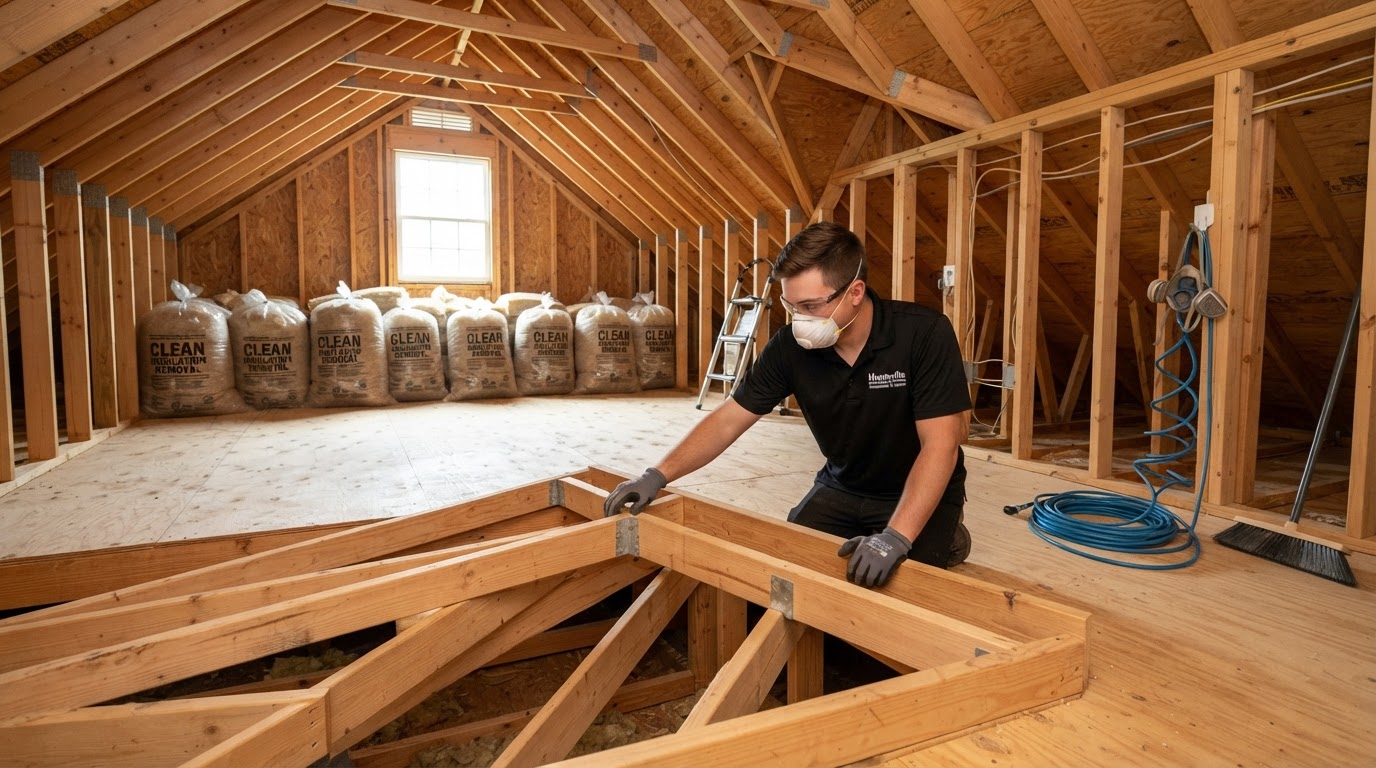
Removal is planned around access. Attic-floor insulation can often be vacuumed or extracted; wall and ceiling cavity insulation requires opening the assembly. Once the substrate is exposed and confirmed dry and sound, the new spray foam approach is determined. For a conditioned roofline, open-cell or closed-cell may be selected based on rafter depth and vapor strategy. For a crawl space or foundation wall, closed-cell is frequently evaluated. Product and thickness requirements vary by assembly.
Depending on the project and existing material, removal may be incorporated into the insulation project or may require a specialized provider for certain conditions. We are clear about which situations fall outside standard insulation replacement so owners can plan accordingly. The goal is a clean, sound substrate and a new thermal and air barrier that matches the assembly, not foam applied over unknown conditions.
| Situation | Typical action | New foam consideration |
|---|---|---|
| Changing attic to roofline | Remove old floor insulation | Open-cell or closed-cell to rafters |
| Clean, dry compatible material | May remain in place | Apply foam to the target assembly |
| Damaged or wet insulation | Remove; inspect substrate | Foam only after substrate is sound |
| Suspect or hazardous material | Specialized provider may be needed | Coordinate before any foam |
Planning an Insulation Removal & Replacement Project
A removal-and-replace project follows a review-first sequence so the new foam goes onto a known, sound assembly.
Identify existing insulation
We determine the type and condition of the current material and why removal is being considered for the project.
Check for leaks and damage
We look for active roof or plumbing leaks and substrate damage. Wet or suspect material is flagged, and specialized remediation may be recommended separately.
Plan removal and access
Based on access, we plan how existing material comes out and how the substrate will be exposed for inspection.
Apply new spray foam
Once the substrate is dry and sound, the appropriate open-cell or closed-cell foam is applied to the prepared assembly and the site is cleaned.
Related Spray Foam Services
Huntsville Spray Foam Installation evaluates insulation removal and replacement projects in Huntsville and North Alabama on a case-by-case basis, identifying existing material and substrate condition before recommending any new application.
Insulation Removal & Replacement FAQs for Huntsville Property Owners
Common questions about removing old insulation before a spray foam application in the Huntsville area.
Does old insulation need to be removed before spray foam?
Can fiberglass be replaced with spray foam?
Should attic insulation be removed before spraying the roof deck?
Can damaged insulation be sprayed over?
Does Huntsville Spray Foam Installation remove hazardous insulation?
Can existing crawl-space insulation be replaced?
How is insulation-removal pricing determined?
Discuss Your Insulation Removal & Replacement Project
If you are evaluating old attic, crawl space, or cavity insulation before a spray foam application, Huntsville Spray Foam Installation can review the material, the substrate, and the intended new assembly. Call (256) 361-1406 or request an estimate to talk through your replacement project.